Ten minutes at the edge of the garden
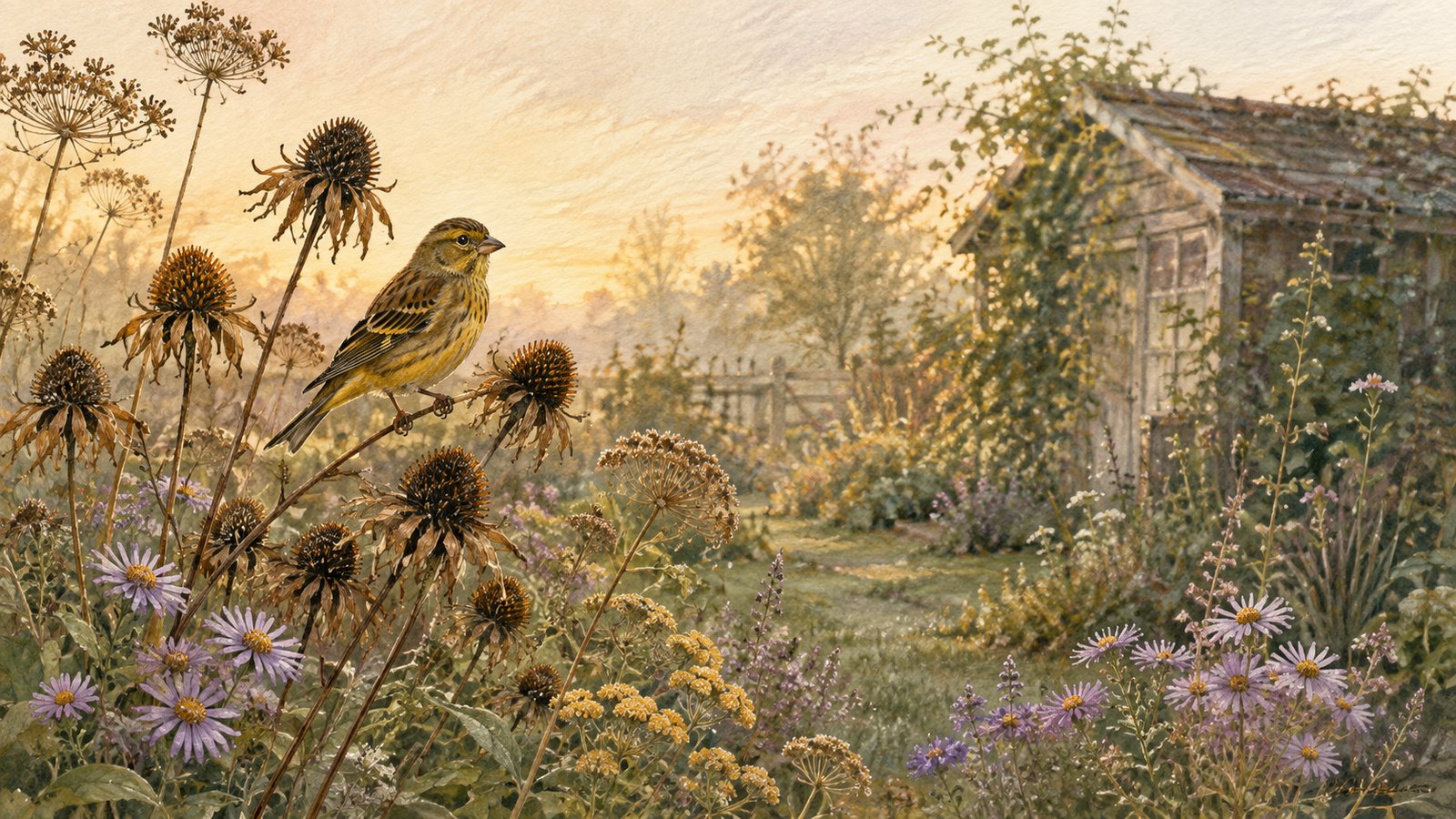
Begin with a place, not a project
There is a tempting way to start a notebook: buy something beautiful, make a list of ambitious intentions, and wait for a day worthy of the first page.
Try a smaller beginning. Pick a view you already have. A windowsill will do. So will a patch of pavement where a few leaves collect. The important part is not how impressive the place looks, but whether you can return to it.
Describe before you decide
For the first few minutes, set names aside. Write about shape, movement, position, and sound. "Three short calls from behind the fence" is a useful note. You do not have to turn it into an identification to make it count.
Then separate what you noticed from what you guessed. You might write two short headings: I saw and I wonder. Keeping those apart leaves your next visit something to investigate.
Leave with one sentence
Before you close the notebook, choose one detail worth finding again. Perhaps it is a curled edge, a patch of shadow, or a branch that moves while the branches around it stay still.
One clear sentence is enough. A notebook becomes interesting through return, not through a perfect first entry.
Your first prompt: choose one small view, spend ten quiet minutes with it, and describe a detail without naming it.